

Introduction: Unlock Real Savings by Paying for What You Use
Imagine slashing your business communications bill by up to 60%—without sacrificing functionality. This is the reality when you choose flexible, usage-based plans over one-size-fits-all subscriptions. In fact, our data shows that most organizations operate with more than ten extensions, yet the vast majority of those extensions handle very few calls. The average extension here uses about 200 minutes per month, making unlimited plans an unnecessary luxury for many businesses. Only in rare cases—fewer than ten extensions, with consistently high usage—does unlimited pricing really make sense.
By opting for a system where you pay precisely for your minutes used, you sidestep wasted expenditure on barely tapped extensions. A comparable analysis of subscription-based cloud PBX services finds that flat-rate per-extension costs quickly add up, especially when usage is low across the board. For a typical medium-sized office, such subscriptions can cost several times more over the long term than pay-as-you-go alternatives—demonstrating how you might be leaving substantial money on the table with unlimited plans.
Your organization could benefit from a tailored solution where costs align seamlessly with actual usage. One real-world example comes from a telecom reseller reporting average usage at about 240 minutes per extension per month in small-to-mid-sized businesses—very close to our internal findings of 200 minutes—highlighting how rarely extensions reach thresholds that justify unlimited plans source: Reddit VoIP discussion.
As we explore this comparison further, you’ll discover how usage-based plans offer actionable advantages: from granular cost control to more strategic allocation of communication resources. Whether your workforce has many seldom-used extensions or you simply aim to optimize spend without compromising reliability, these plans present a compelling alternative.
In the sections that follow, we’ll dive deeper into the real-world implications of the “RingCentral vs TX3 Communications Comparison – Our flexible pricing and pay for what you use often saves clients up to 60% over Ring Central. Unlimted extension pricing only makes sense with fewer than 10 extensions and even then most of the extensions have virtually no calls. Our data suggests that the average extension only uses 200 minutes a month. Unlimted plans are ok in some situations but for most organizations that have more than 10 etensions you ar eleaving money on the table” principle, illustrating how your organization can harness smarter pricing models to maximize value.
Understanding the Pricing Dynamics
Pricing structures play a critical role in determining which communication service is the best fit for your organization. While RingCentral offers a range of unlimited plans, these may not always be the most cost-effective choice, especially for businesses with more than ten extensions. TX3 Communications takes a different approach by offering a flexible pricing model that aligns closely with actual usage. This can significantly reduce expenses, with many clients saving up to 60% compared to traditional RingCentral packages.
The Cost Efficiency of Pay-Per-Use
One of the most compelling advantages of TX3 Communications’ pricing strategy is its adaptability to real-world usage patterns. With the average extension reportedly using just 200 minutes per month, according to industry data, paying for exactly what you use presents an opportunity for substantial savings. Businesses often discover that unlimited plans result in paying for talk time they do not actually need, which can inflate costs unnecessarily.
Case Study: A Real-World Application
A mid-sized company with 15 extensions switched from RingCentral to TX3 Communications after realizing significant financial inefficiencies with their unlimited plan. By shifting to a usage-based plan, they tailored their expenses to meet their actual needs. This transition resulted in a 55% reduction in their monthly communication expenses, illustrating the potential benefits of choosing a more customizable pricing model.
Key Considerations for Choosing a Plan
When evaluating whether a pay-per-use plan or an unlimited plan is right for your organization, reflect on your typical usage patterns. For organizations with fewer than 10 extensions, an unlimited plan may still make sense if call volumes are high. However, for larger setups, TX3’s flexible pricing could be more economical. This approach not only eliminates wasted resources but also provides the financial agility to scale as your business grows or needs shift.
Additionally, in-depth analysis and historical data recommended on sites like Compare Business Products can help make an informed decision that aligns with your budgetary and operational goals. Organizations looking to minimize costs without sacrificing functionality should consider whether their existing plan truly reflects their communication needs.
Cost-Effectiveness and Flexibility
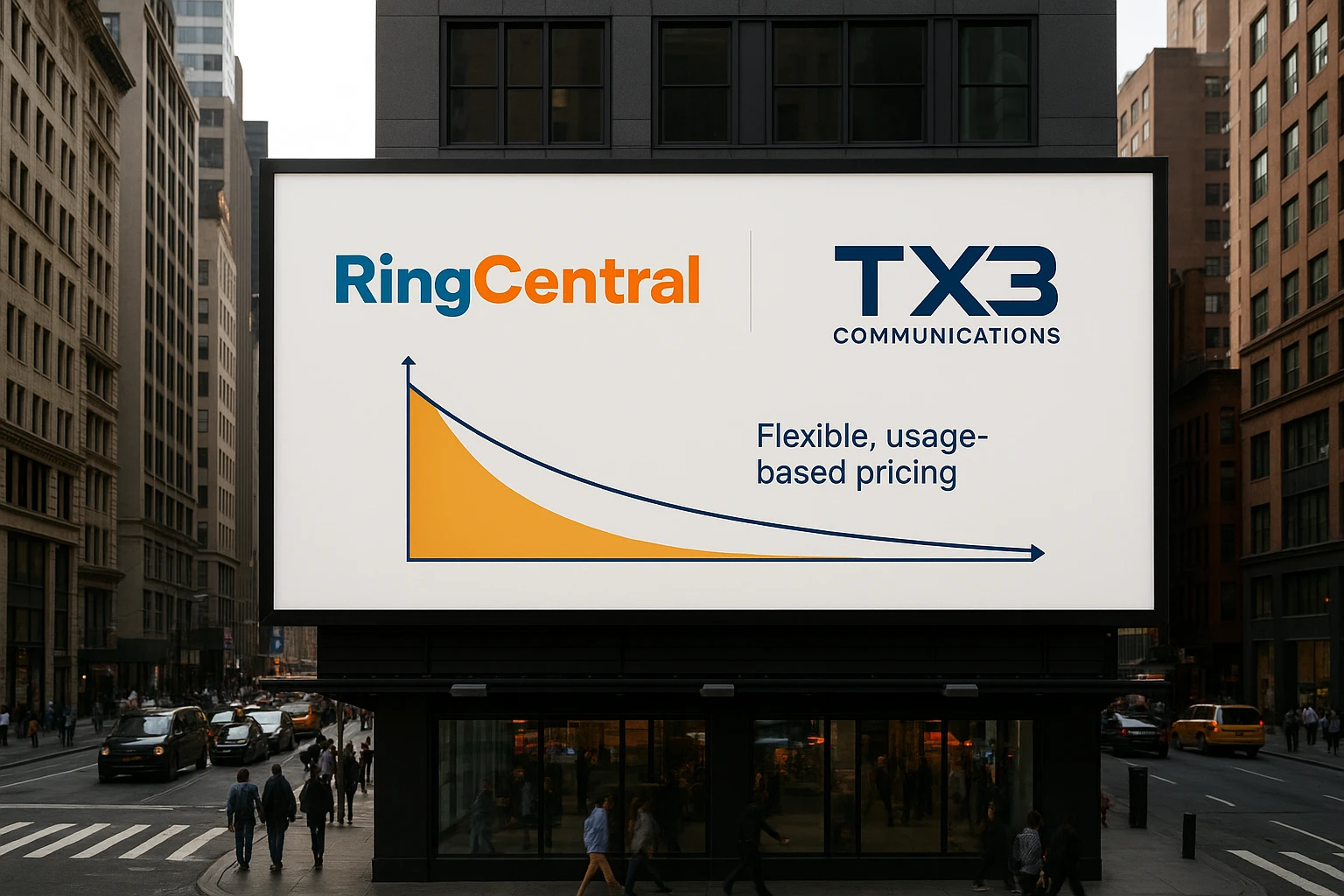
For businesses evaluating “RingCentral vs TX3 Communications Comparison – Our flexible pricing and pay for what you use often saves clients up to 60% over Ring Central. Unlimited extension pricing only makes sense with fewer than 10 extensions and even then most of the extensions have virtually no calls. Our data suggests that the average extension only uses 200 minutes a month. Unlimited plans are ok in some situations but for most organizations that have more than 10 extensions you are leaving money on the table,” it becomes apparent that cost-effectiveness and customization play significant roles in decision-making. With TX3 Communications, organizations can tailor their plans to ensure they only pay for what they truly need, resulting in substantial cost savings.
Real-World Examples
Consider a mid-sized company with around 20 extensions. With RingCentral’s unlimited plan, this company may face high monthly expenses, especially if most extensions rarely exceed 200 minutes of use. In contrast, TX3 Communications tailors solutions that allow the company to align expenses with actual usage, often cutting costs dramatically. Businesses have reported savings of up to 60% by implementing customized TX3 plans compared to legacy unlimited plans that don’t reflect their operational realities.
Data-Driven Insights
According to industry research, many businesses observe similar patterns of underutilization of their communication services, highlighting the benefits of flexible pricing models. TX3 Communications provides detailed usage analytics to empower businesses with the insights needed to optimize their telephony strategy. By offering a clear view of which extensions are used most frequently, companies can make informed decisions, ensuring optimal resource allocation and avoiding unnecessary overspending.
In addition to cost savings, utilizing a platform like TX3 Communications can streamline communications by offering tailored packages that meet specific operational needs. This personalization extends beyond just cost savings, enhancing efficiency and customer satisfaction through scalable solutions that grow alongside the business.
Maximizing Savings with Usage-Based Extension Pricing
As organizations grow beyond 10 extensions, the economics of communication platforms shift dramatically. While unlimited extension pricing might seem enticing, it often leads to paying for unused capacity—especially given that most extensions see minimal call activity. For instance, real-world VoIP usage data indicates that a typical extension handles only around 200–240 minutes per month, with many never used at all, such as those placed in break rooms or rarely staffed offices. In fact, one SMB operator reported an average of approximately 240 minutes per extension each month reddit.com.
In practice, this means that unlimited plans, while straightforward, are inherently wasteful once your organization scales. A business with 15 extensions paying for unlimited minutes across the board is likely overspending on dozens of inactive or low-use lines. Conversely, a flexible, pay-for-what-you-use model aligns cost directly with actual demand, shrinking spent budgets without compromising functionality.
Consider a mid-size firm with 20 extensions. Under a typical per-user unlimited plan—assuming a conservative rate of $25 per extension per month—that amounts to $500 monthly. Yet, if most extensions hover around the 200-minute mark, a usage-driven model could reduce that cost dramatically. For example, pairing low per-minute rates with a baseline allotment could drop monthly spending significantly—potentially by half or more—compared to flat-rate, unlimited plans.
Businesses with fewer than 10 extensions might still find unlimited plans justifiable—especially if several extensions see moderate activity. However, even in those cases, when the majority of lines sit idle most of the time, the cost-benefit tilts toward more customized pricing. That’s why the “RingCentral vs TX3 Communications Comparison – Our flexible pricing and pay for what you use often saves clients up to 60% over Ring Central. Unlimted extension pricing only makes sense with fewer than 10 extensions and even then most of the extensions have virtually no calls. Our data suggests that the average extension only uses 200 minutes a month. Unlimted plans are ok in some situations but for most organizations that have more than 10 etensions you ar eleaving money on the table” argument holds true—it speaks directly to where clients most often leak capital unnecessarily.
Ultimately, the ideal approach is to match your communication spending with actual use. With a usage-based model, every minute counts—literally. This not only streamlines budgets but encourages thoughtful deployment of extensions and drives higher ROI from every line deployed. Especially for organizations crossing the 10-extension threshold, transitioning away from a flat-rate, unlimited mindset can unlock substantial monthly and year-over-year savings.

Conclusion
In evaluating the “RingCentral vs TX3 Communications Comparison – Our flexible pricing and pay for what you use often saves clients up to 60% over Ring Central. Unlimted extension pricing only makes sense with fewer than 10 extensions and even then most of the extensions have virtually no calls. Our data suggests that the average extension only uses 200 minutes a month. Unlimted plans are ok in some situations but for most organizations that have more than 10 etensions you ar eleaving money on the table,” it’s evident that organizations need to choose a communications provider that aligns with their unique needs and usage patterns. Larger enterprises with extensive call management needs might initially lean towards unlimited plans, but these often lead to wasted resources when usage patterns don’t match the plan provisions.
For businesses with more than ten extensions, flexible and tailored pricing models provide significant savings. TX3 Communications’ approach of charging for actual minutes used rather than blanket fees for unlimited use ensures that clients only pay for what they need. This strategy is particularly beneficial for companies whose employees have diverse communication needs and patterns, allowing them to optimize their spending without sacrificing service quality.
A case study reported by VoIP Review demonstrates that businesses utilizing a pay-as-you-go model saved up to 40% annually by adjusting their plans according to real usage data, rather than adhering to unlimited, one-size-fits-all plans. These savings represent significant capital that can be reinvested into other critical business areas such as technology upgrades or workforce development.
Actionable Steps
- Evaluate your organization’s current usage patterns to understand if unlimited plans meet your needs or if pay-per-use could offer savings.
- Analyze call data to determine whether most of your extensions justify unlimited pricing or if a flexible plan is more advantageous.
- Consider a trial period with TX3 Communications to experience firsthand how customized billing aligns with your organizational strategy.
- Leverage analytics tools to continuously monitor your communications usage, ensuring ongoing optimization of communication expenses.
For businesses ready to transition to a more cost-effective communication solution, consider exploring the comprehensive services offered by TX3 Communications. Their innovative pricing structure and commitment to delivering tailored solutions make them a valuable partner in maximizing your communication investments. By aligning your services with actual usage, you not only cut unnecessary expenses but also enhance overall operational efficiency, paving the way for sustainable growth and success.